
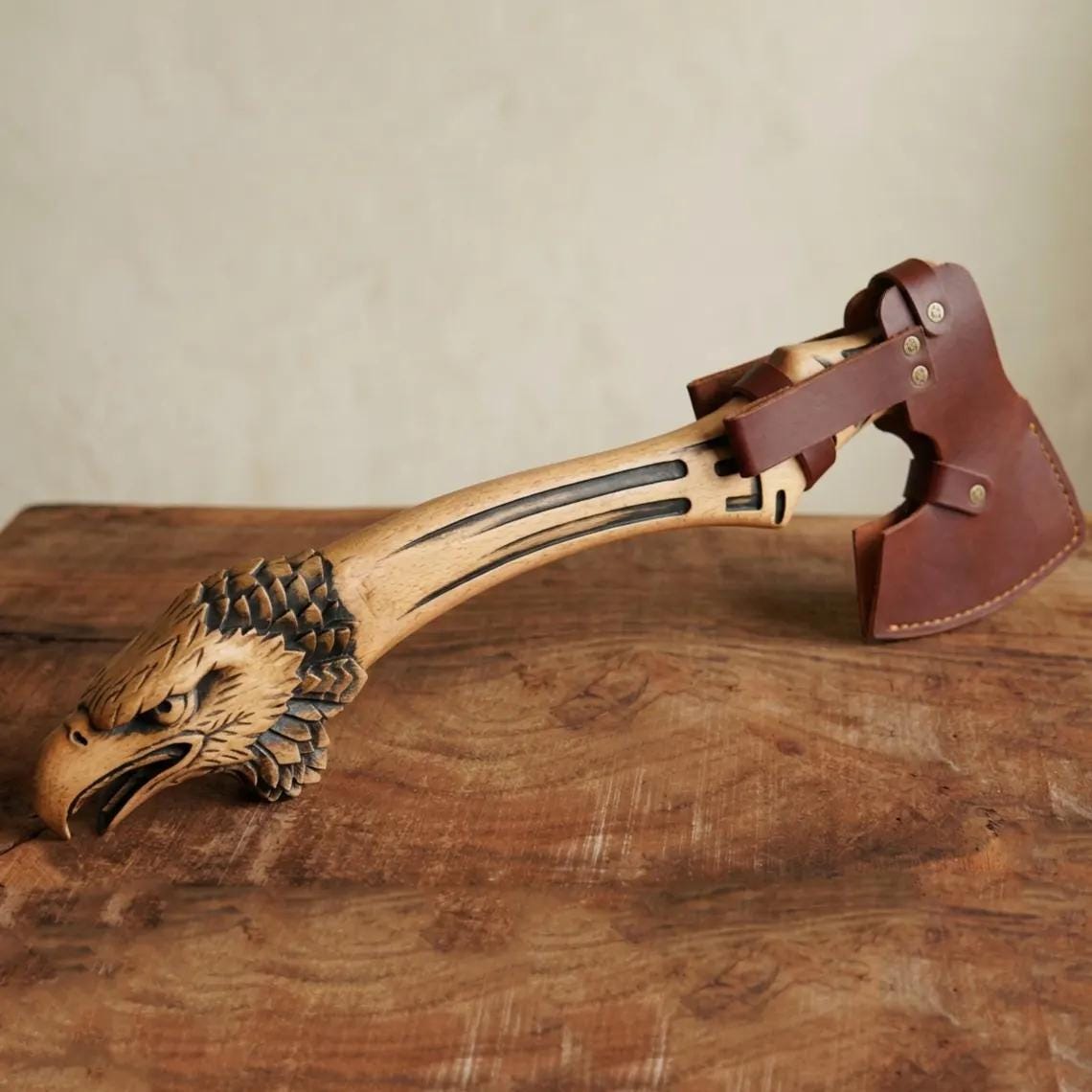
A handmade axe, sword or knife is one of the few gifts that is both useful and lasting. It is made by a person, from steel and natural materials, and it can be used, displayed and handed down for generations. This guide helps you choose the right piece for the right occasion, with practical tips on personalization, timing, care and the legal and cultural points worth knowing before you buy.
Before You Choose: A Few Basics
Think about the person, not just the occasion. The best gift matches how they live. Ask yourself:
- Do they cook, camp, hunt, fish, garden, work with wood or collect?
- Are they a practical user or a collector who prefers display pieces?
- Do they have an interest in history, such as Viking, medieval or Roman culture?
- Do they already own blades, and if so, which kinds?
Match the tool to the purpose.
- Everyday carry and pocket-size knives: compact, practical and good for almost any adult.
- Kitchen knives: chef’s knives, paring knives and bread knives suit cooks and new households.
- Hunting, bushcraft and camp knives: fixed-blade knives for outdoor use.
- Hatchets and camp axes: small, light axes for camping and splitting kindling.
- Felling and forest axes: larger tools for serious woodwork and firewood.
- Bearded axes and historical replicas: popular with historical enthusiasts and re-enactors, and equally at home as display pieces.
- Swords: best for collectors, re-enactors and display. Always check whether a sword is built for display or for functional use, because they are not the same.
Consider the whole package. A blade should come with a quality sheath, scabbard or guard, and ideally a short care guide. These make a gift complete and safe to use and store.
Birthdays
A birthday gift should feel personal, and blades make excellent milestone gifts.
- Milestone birthdays (18, 21, 30, 40, 50 and beyond): a standout piece such as a custom chef’s knife, a hunting knife or a decorative axe marks the occasion. Engraving the date or a short message turns it into a keepsake.
- A first knife for a young person: only with the approval of a parent or guardian, and only after discussing safe handling. Choose a small, simple, sturdy knife and consider pairing it with a lesson in safe use. Age rules for owning blades vary by place, so check local law.
- For collectors: a limited or unique piece, such as a pattern-welded (Damascus-style) knife or a historical replica, is often prized more than a practical tool.
- For the cook: a quality kitchen knife is a gift they will use almost daily.
Tip: Birthdays arrive on fixed dates, so order early if you want engraving or a custom handle.
Weddings
A wedding gift for a couple should be useful, beautiful and lasting.
- Kitchen knife sets or a single standout chef’s knife: ideal for a new home and a gift the couple will use together.
- A cutting board or knife block paired with a knife: completes the gift.
- A decorative axe or display piece: well suited to couples who enjoy rustic, outdoor or historical themes.
- Ceremonial swords: some weddings include sword traditions, such as military sabre arches, or historical and themed ceremonies such as handfasting-style events. If this is for a ceremony, tell the maker, since display or ceremonial use has different requirements from a working blade.
- Personalization: engraving the couple’s names and wedding date, or having a maker’s mark and date, makes the gift special.
Tip: A wedding registry may already list kitchenware, so check first to avoid duplicates.
Groomsmen Gifts
Knives are one of the most popular groomsmen gifts, because they are practical, masculine in tradition and easily personalized. They also suit the “thank you for standing with me” spirit of the gift.
- Matching pocket knives or small fixed-blade knives: each engraved with the recipient’s name or initials, or the wedding date.
- A gift box or leather sheath: presentation matters when you give several gifts at once.
- A set for the whole party: matching pieces create a shared keepsake, and a slightly different piece for the best man is a thoughtful touch.
- Handle choices: wood, bone-like materials and other options can be matched or varied for each person.
Practical points:
- Order early. Handmade, engraved sets take time. Allow several weeks or more, and confirm timing with the maker.
- Check travel rules. Many groomsmen travel to the wedding. In most places, including with airlines, knives are not allowed in carry-on luggage and must be packed in checked baggage, or the gift can be handed over after arrival. Rules vary by country and airline, so check before travelling.
- Check local laws on carrying blades in the wedding location, and the age of the recipients.
Father’s Day
Fathers often like practical, well-made things, and a good blade fits that perfectly.
- For the outdoorsman: a hunting knife, camp knife or hatchet.
- For the cook or grill master: a chef’s knife, boning knife or carving knife.
- For the woodworker or homeowner: a quality axe or hatchet for firewood and yard work.
- For the collector or history lover: a historical replica or a handsome display axe or sword.
- A personal touch: engraving “Dad,” a short message, a date or the family name makes the gift sentimental. Consider a piece that can be passed to the next generation.
Tip: Father’s Day is on different dates in different countries. In the United States, the United Kingdom and Canada, among others, it is the third Sunday in June, but some countries observe it on other dates. Check your local date and order well ahead.
Christmas
Christmas is the busiest gift season, and handmade items sell out or run into long lead times.
- Order early. Start in autumn if you want a custom or personalized piece, since a handmade blade can take weeks to complete, and shipping is slower and busier in December. Contact us for current lead times.
- Stocking-size gifts: small pocket knives, paring knives or sharpening and care kits.
- Main gifts: a chef’s knife, a hunting knife, a hatchet or a display axe.
- Statement gifts: a sword, a bearded axe or a pattern-welded knife for the person who has everything.
- Gift certificates: if you are unsure about size, style or steel, a gift certificate lets the recipient choose.
Tip: Add a care kit (a little oil, a cloth and a care card) so the gift is ready to use and maintain.
Anniversaries
Anniversary gifts have a long tradition of themes tied to the year, and several suit blades and bladesmithing very well. Traditional lists vary a little between countries, but common ones include:
- 1st: paper
- 3rd: leather (a handsome leather sheath)
- 5th: wood (a knife with a beautiful wooden handle, or a wooden gift box)
- 6th: iron
- 8th: bronze
- 10th: tin or aluminum
- 11th: steel (a natural fit for a handmade knife or axe)
- 15th: crystal
- 20th: china
- 25th: silver
- 30th: pearl
- 40th: ruby
- 50th: gold
The 3rd, 5th, 6th and 11th anniversaries are especially fitting for handmade blades, using leather, wood, iron and steel. For any year, a custom piece with the date and names engraved turns an ordinary anniversary into a keepsake. Pairing a knife with a dinner for two, or a chef’s knife with a cooking class, makes a more complete gift.
Personalization Options
- Engraving: names, initials, dates or short messages on the blade, guard or a plate.
- Handle materials: wood types, colours and finishes can be chosen to suit the recipient.
- Custom shapes and sizes: a knife that fits the recipient’s hand or use.
- Maker’s mark: an identifying stamp that shows it is a handmade piece.
- Sheath and box: leather sheaths, a presentation box or a wooden case.
Personalized and custom items usually take longer and are often not returnable, so confirm details and timing before ordering.
An Old Superstition Worth Knowing
In many cultures there is a folk belief that giving a knife as a gift can “cut” the relationship between giver and recipient. The traditional remedy is simple: the recipient gives the giver a small coin, so the knife is technically “bought” rather than given. It is a bit of fun tradition, and you can mention it with the gift if you like. Not everyone follows it, and customs vary by culture.
Safety, Legal and Practical Checks
- Age: many places restrict the sale or ownership of blades to adults. Never give a blade to a minor without a parent or guardian’s approval.
- Local laws: rules on owning, carrying, shipping and travelling with knives, swords and axes vary widely. Check the rules for both the giver and the recipient’s location.
- Display vs functional: tell the recipient whether a piece is meant for use or for display, and how to care for it.
- Care: carbon steel should be kept dry and lightly oiled, and stored in a dry place. A care card in the box helps.
- Safe storage: remind recipients to store blades safely, out of reach of children.
Quick Pick Guide
- Birthday: personalized knife or hatchet, kitchen knife for cooks.
- Wedding: chef’s knife or set, decorative axe, ceremonial piece if needed.
- Groomsmen: matching engraved pocket or fixed-blade knives with sheaths.
- Father’s Day: hunting knife, chef’s knife, hatchet or display axe.
- Christmas: care kits and small knives for stockings, a main knife or axe, a gift certificate if unsure.
- Anniversary: a leather-sheathed knife (3rd), wooden-handled knife (5th), iron or steel piece (6th and 11th), or a custom engraved piece.
Ready to Choose?
Whatever the occasion, a handmade blade tells the recipient that you chose something made with care. Browse our collection, or contact us about a custom or personalized piece, and let us help you find the right gift.
Note: anniversary traditions, holiday dates, travel rules and laws differ by country and region. Always check local requirements before gifting or shipping a blade.